
Every bottle inspected before it reaches the filler
Whether 15,000, 40,000 or 120,000 bottles per hour: nScan adapts to your line and detects foreign objects, broken glass and shape defects on new and returnable glass bottles – in real time, right on the conveyor.

- Line speed
- 120,000 bphUp to – matched to your line speed
- Inspection tasks
- 6 inspection tasksIn one compact system
- Data processing
- No cloudAI analysis right at the line
- Teach-in
- Teach & GoTaught in minutes with one good sample
From base to finish
A single glass splinter in the base or a chipped finish can become a risk to consumers and your brand once the bottle is filled. nScan inspects every bottle – new glass or returnable – at all critical points and rejects defective bottles before they are filled.

Foreign object detected
Base inspection
Glass splinters, yeast residue, foil fragments or dirt: anything that doesn’t belong on the bottle base is reliably detected.

Chip detected
Finish inspection
Chips, cracks and damaged threads compromise the seal of the closure. nScan finds them before the bottle enters the filler.
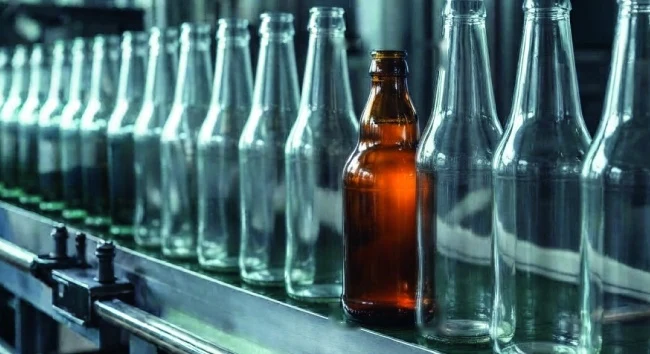
Foreign bottle detected
Foreign bottle detection
Bottles of the wrong shape, size or color are identified by their contour and color and rejected.

Tilt detected
Geometry inspection
The height, contour and position of every bottle are compared with the trained good sample – deviations such as tilt stand out immediately.

Crack detected
Sidewall inspection
The bottle wall is checked for cracks, scratches, air bubbles in the glass and leftover label residue.

Code read
Markings and codes
Mold numbers, dot codes and other embossings in the glass are read automatically and made available for analysis.
Inspect, reject, trace
- Inspection from several anglesCameras from above and at an angle, together with transmitted light, capture every bottle right on the belt.
- Automatic rejectionFaulty bottles are sorted out – with a check that the rejection succeeded.
- Complete traceabilityEvery bottle is tracked from infeed to rejection.
- Integration into existing linesInstallation into existing filling and conveying systems.
What nScan sees – and the eye misses
Hover over an image to see the nScan analysis.


Built for continuous operation in bottling
All-in-one device
Camera, lighting and AI software from a single source – easy to integrate into existing lines.
360° inspection
Multiple synchronized cameras for complete all-round coverage.
High-performance hardware
Real-time detection even at high production speeds.
AI without the cloud
Fast, secure data processing right at the line.
Teach & Go
New bottles taught in just a few minutes using one good sample.
Ready 24/7
Reliable in continuous and multi-shift operation.
Seamlessly connected
PROFINET, EtherCAT, OPC UA
Made in Germany
Developed and built near Munich.
Frequently asked questions
Empty-glass inspection
Which defects does nScan detect on empty glass bottles?
nScan inspects the base, finish and sidewall: foreign objects, broken glass, yeast and dirt residue, chips on the thread and sealing surface, cracks, scratches, air bubbles and label residue. The system also detects foreign bottles, geometry defects such as tilt or incorrect height, and markings such as mold numbers and dot codes.
How many bottles per hour can nScan inspect?
nScan is matched to the speed of your line – whether 15,000, 40,000 or 120,000 bottles per hour. Inspection takes place in real time, right on the conveyor.
Is nScan also suitable for returnable bottles?
Yes. nScan inspects new and returnable glass bottles and rejects damaged or dirty bottles before they reach the filler.
How much effort does it take to teach in new bottle types?
With Teach & Go, nScan is taught in a few minutes using one good sample – no programming required.
Can nScan be integrated into an existing bottling line?
Yes. nScan is installed in existing filling and conveying systems and communicates with the line control via PROFINET, EtherCAT and OPC UA.
Is image data transferred to a cloud?
No. The AI analysis runs directly at the line. No cloud connection is required.
Want to learn more about our inspection systems?
Get in touch and one of our experts will get back to you shortly.